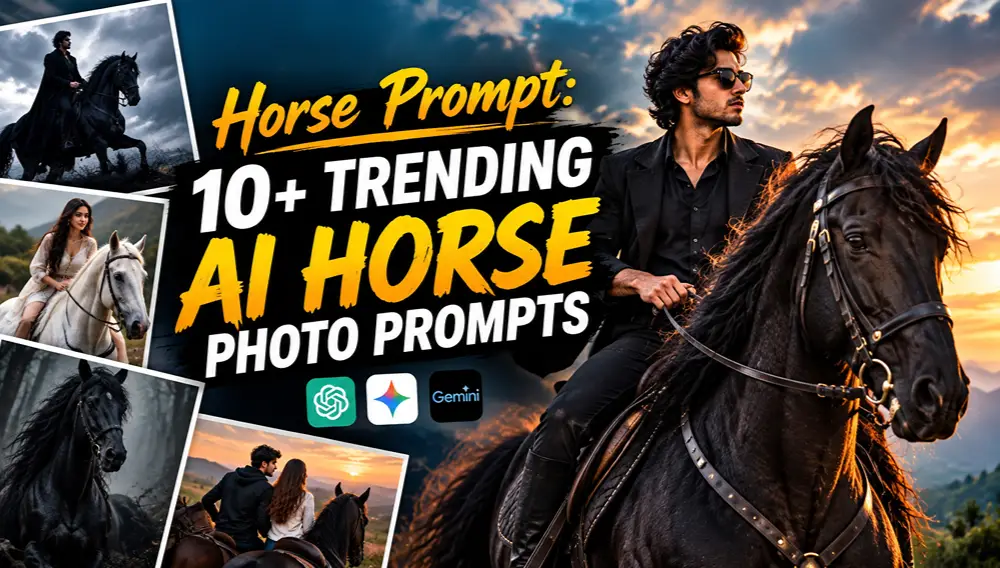
A horse prompt can turn an ordinary portrait into a realistic horse-riding scene, cinematic rider photo, black-horse aura image, or stylish Instagram edit prompt using Gemini, ChatGPT, or another AI image generator. Instead of describing only the horse, the best results combine the rider, pose, background, lighting, camera, clothing, and realistic facial details.
The horse trend has become especially popular for AI photos featuring black horses, dramatic riding scenes, luxury portraits, and confident aura-style images. Current prompt examples commonly use cinematic compositions, strong rider poses, open landscapes, and realistic horse details. Below are ready-to-copy prompts for boys, girls, couples, riding scenes, black-and-white edits, and viral Instagram-style ai photos.
What Makes a Good Horse Prompt?
These horse prompts are designed for image-to-image editing. Upload a clear photo first, then paste the prompt into Gemini, ChatGPT, or a compatible AI photo generator. A good prompt establishes the subject, identity-preservation rules, pose, horse breed and color, environment, lighting direction and temperature, camera lens and aperture, texture detail, and a clear composition and aspect ratio, plus a list of anatomy issues to avoid.
Best Horse Prompts for Gemini and ChatGPT
All of the prompts below are copy-paste ready. Upload your reference photo first, then paste the prompt right after it. Tap View Full Prompt to expand any box, then Copy Prompt to grab it in one tap.
1. Cinematic Black Horse Riding Prompt
POWERFUL RIDER PORTRAIT
A strong choice if you want a powerful rider portrait with a black horse and cinematic atmosphere.
Use the uploaded photo as the exact identity reference for the rider. Preserve the person’s identity, facial structure, skin tone, eyes, nose, lips, hairstyle, and natural proportions exactly, with no beautification, face reshaping, age change, or alteration of identity. Retain natural pores, subtle skin texture, minor imperfections, and natural facial asymmetry from the original photo, avoiding overly smooth or AI-perfect skin. Create a photorealistic cinematic scene of the same person confidently riding a powerful glossy black horse across an open landscape, seated naturally with balanced posture, relaxed shoulders, both hands holding the reins correctly, and a calm, confident expression while looking slightly toward the camera. Use warm golden-hour sunlight coming from the upper left at approximately 25 degrees, creating a soft amber rim light around the rider and horse with natural cool shadows. Capture the scene with an 85mm full-frame lens at f/2.0, shallow depth of field, realistic background compression, and subtle natural motion in the horse’s mane. Make the skin, hair, leather saddle, reins, clothing fabric, and horse coat physically textured and realistic rather than plastic or flat. Compose as a vertical 4:5 Instagram portrait with the complete rider and horse visible. Avoid extra or malformed fingers, distorted limbs, duplicated horse legs, unnatural reins, floating objects, harsh silhouettes, artificial skin, excessive HDR, text, logos, and watermarks.
2. Black Horse Aura Prompt
EDITORIAL BLACK & WHITE
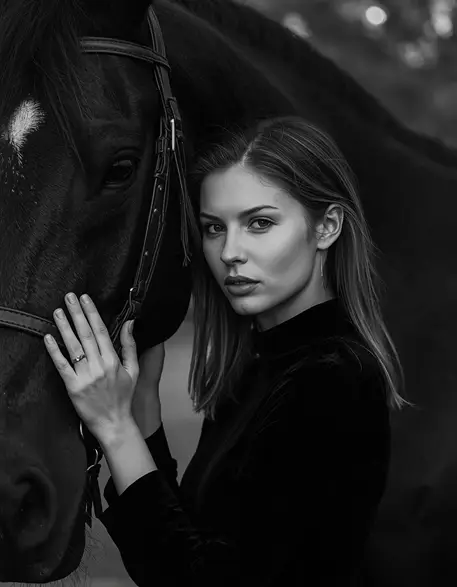
Black-and-white horse images are strongly associated with the current aura-style aesthetic because they emphasize posture, contrast, and presence rather than colorful backgrounds.
Use the uploaded image as the exact identity reference and preserve the person’s facial identity, skin tone, facial structure, hairstyle, and proportions without beautification or identity alteration. Keep natural pores, subtle skin texture, small imperfections, and natural facial asymmetry visible, with no plastic or AI-perfect skin. Create a powerful black-and-white editorial portrait of the same person standing beside a majestic black horse, one hand resting naturally on the horse’s neck while the other holds the leather reins, with a relaxed upright posture and a quiet, confident expression. Position the main light 45 degrees to the left and slightly above eye level, using soft directional daylight with a neutral 5000K tone and gentle rim light separating the hair and horse mane from the background. Photograph with an 85mm lens at f/1.8, shallow depth of field, realistic tonal falloff, and subtle film grain. Preserve physically accurate hair strands, skin texture, horse hair, leather reins, and clothing fibers. Use a vertical 4:5 composition with the horse slightly behind the subject for depth. Avoid exaggerated muscles, over-smoothed skin, warped horse anatomy, extra fingers, merged hands, duplicate reins, artificial outlines, excessive contrast, text, and watermarks.
3. Horse Riding Prompt for Boys
RURAL DIRT PATH
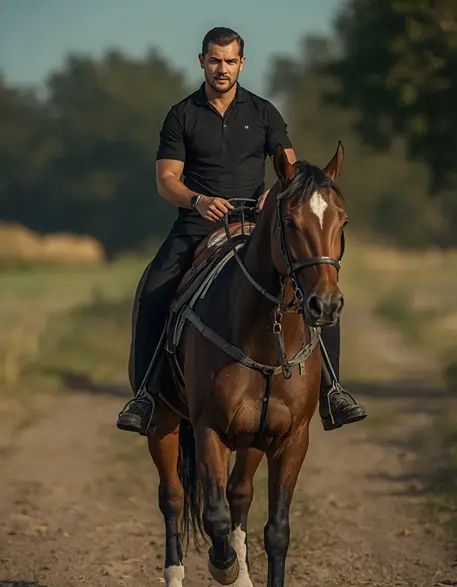
For a masculine Instagram-style edit, use a confident pose without making the rider look stiff.
Use the uploaded photograph as the exact face and identity reference for the male subject. Preserve his exact facial features, skin tone, hairstyle, facial proportions, and identity, with no beautification, reshaping, age alteration, or identity change. Maintain natural pores, subtle skin texture, minor imperfections, and natural facial asymmetry instead of creating perfectly smooth AI skin. Generate a photorealistic full-body image of the same man riding a muscular dark-brown horse along a rural dirt path, wearing a fitted black shirt, dark trousers, leather boots, and a simple wristwatch. He sits naturally in the saddle with relaxed shoulders, one hand holding the reins and his gaze directed slightly beyond the camera with a calm confident expression. Use late-afternoon sunlight from the right side at approximately 35 degrees, around 4300K, producing warm highlights and soft directional shadows. Capture with a 70-200mm lens at 100mm, f/2.8, shallow background compression, realistic depth of field, and subtle environmental motion blur behind the horse. Make the horse coat, mane, skin, hair, clothing fabric, saddle leather, and dirt physically realistic. Use a vertical 4:5 Instagram composition. Avoid distorted hands, extra fingers, incorrect horse anatomy, floating feet, duplicated reins, plastic skin, artificial clothing folds, excessive sharpening, text, logos, and watermarks.
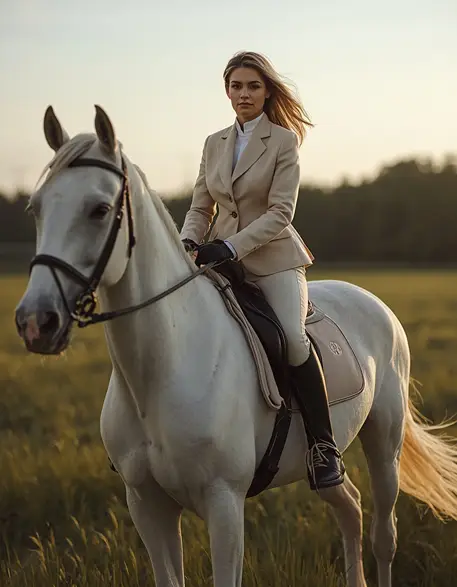
4. Horse Prompt for Girls
ELEGANT EQUESTRIAN
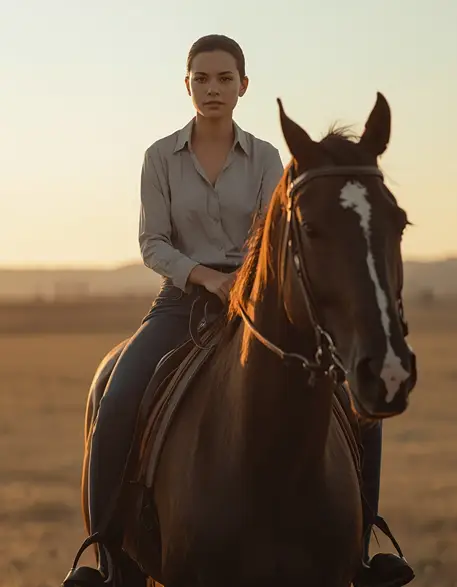
A softer equestrian portrait works better for a girl or woman when the pose, clothing, and lighting remain natural rather than overly dramatic.
Use the uploaded photo as the exact identity reference for the woman. Preserve her facial identity, skin tone, eyes, nose, lips, hairstyle, facial structure, and natural proportions exactly, with no beautification or alteration of identity. Keep visible natural pores, subtle skin texture, minor imperfections, and natural facial asymmetry, avoiding smooth AI-perfect skin. Create a photorealistic portrait of the same woman riding a graceful white Arabian horse through a green meadow, wearing an elegant cream equestrian jacket, fitted riding trousers, tall leather boots, and her natural hairstyle moving slightly in the breeze. Her posture is relaxed and balanced, hands positioned naturally on the reins, with a soft confident smile and eyes looking toward the camera. Illuminate her from the front-left with soft golden-hour sunlight at approximately 30 degrees and a warm 4800K color temperature, with subtle rim lighting along her hair and the horse’s mane. Use an 85mm lens at f/1.8 with shallow depth of field and realistic background compression. Preserve physically accurate fabric drape, individual hair strands, horse hair, leather texture, and natural skin detail. Use a vertical 4:5 composition suitable for Instagram. Avoid excessive beauty retouching, distorted fingers, malformed horse legs, merged hands, unnatural saddle placement, plastic fabric, harsh shadows, text, and watermarks.
Trending Horse Riding AI Photo Ideas
The strongest riding images are not limited to a simple person sitting on a horse. You can change the horse breed, environment, camera angle, movement, outfit, and mood while keeping the same identity-preservation structure.
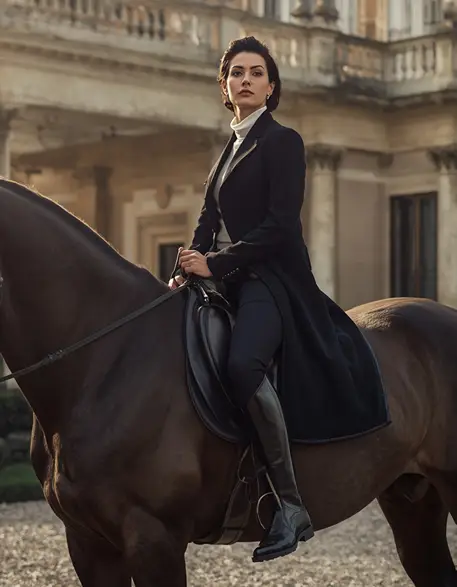
5. Royal Horse Rider Prompt
LUXURY EDITORIAL
A luxury editorial portrait outside a grand estate, suited for a regal, refined mood.
Use the uploaded photo as the exact identity reference and preserve the subject’s identity, facial structure, skin tone, eyes, nose, lips, hairstyle, and proportions exactly, with no beautification, face reshaping, age modification, or identity alteration. Retain natural pores, subtle skin texture, minor imperfections, and natural facial asymmetry, avoiding artificial smoothness. Create a photorealistic luxury editorial portrait of the same person sitting confidently on a tall black Friesian horse outside a grand stone estate, wearing a tailored black riding coat, dark trousers, polished leather boots, and understated accessories. The subject sits upright with relaxed shoulders, one hand holding the reins and the other resting naturally near the saddle, giving a calm royal expression. Use directional sunlight from behind and slightly to the right at 20 degrees, approximately 4500K, creating a controlled golden rim light with soft frontal fill. Photograph with an 85mm lens at f/1.8, shallow depth of field and cinematic compression. Make the horse mane, coat, saddle leather, clothing fibers, hair, and skin physically detailed. Use a vertical 4:5 editorial composition. Avoid exaggerated luxury styling, distorted hands, extra fingers, incorrect horse anatomy, plastic textures, artificial facial symmetry, text, logos, and watermarks.
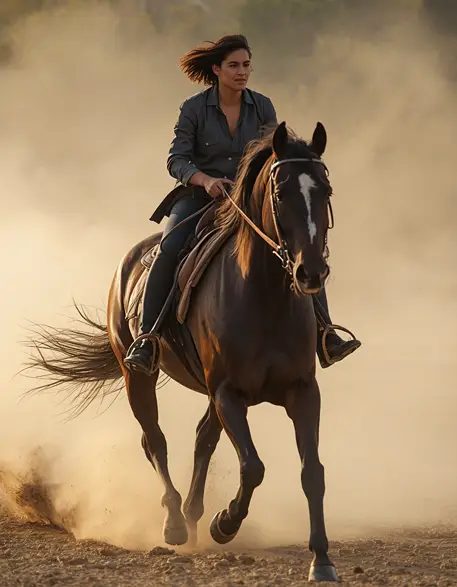
6. Horse Riding Action Prompt
DYNAMIC GALLOP
A controlled gallop across an open field, built for a more dynamic, motion-filled shot.
Use the uploaded image as the exact identity reference for the rider and preserve facial features, skin tone, hairstyle, proportions, and identity without beautification or alteration. Keep natural pores, subtle skin texture, minor imperfections, and natural facial asymmetry, avoiding AI-perfect skin. Create a photorealistic action photograph of the same person riding a powerful black horse as it moves at a controlled gallop across a dusty open field, with the rider leaning slightly forward in sync with the horse’s movement, holding the reins securely and maintaining a focused natural expression. Use low afternoon sunlight from the rear-left at approximately 40 degrees with a warm 4600K tone, creating a subtle rim light around the rider and horse. Capture the moment with a 70-200mm lens at 135mm, f/2.8, fast shutter speed, sharp rider and horse, and gentle motion blur in the background and dust. Preserve realistic horse muscles, mane movement, leather tack, fabric folds, hair strands, and skin texture. Use a vertical 4:5 composition. Avoid frozen-looking motion, extra legs, malformed hooves, distorted hands, duplicated reins, plastic textures, excessive HDR, text, and watermarks.
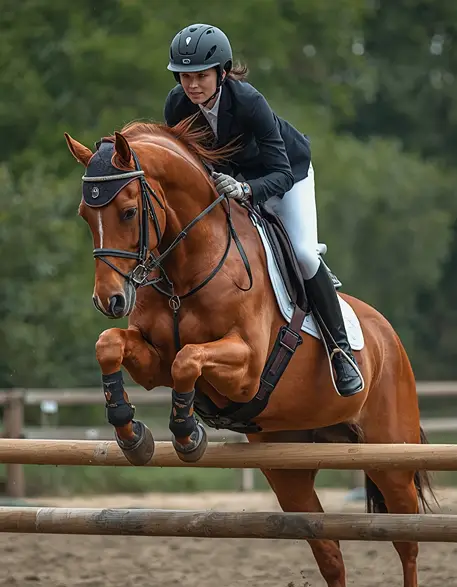
7. Horse Jumping Prompt
EQUESTRIAN ACTION
A cleared jump over a wooden obstacle, ideal for showing skill and motion together.
Use the uploaded photo as the exact identity reference and preserve the rider’s facial identity, skin tone, facial structure, hairstyle, and natural proportions exactly, with no beautification or identity alteration. Maintain natural pores, subtle skin texture, minor imperfections, and facial asymmetry rather than creating an AI-perfect face. Create a photorealistic equestrian action scene showing the same person riding a strong chestnut horse as it jumps cleanly over a wooden obstacle, with the rider leaning naturally forward, heels positioned correctly, hands steady on the reins, and a focused but relaxed expression. Use bright overcast daylight from directly above and slightly left, approximately 5600K, producing soft shadows and balanced highlights. Photograph with a 100mm lens at f/2.8, high shutter speed, shallow depth of field, and subtle background blur. Render realistic horse muscles, individual mane hairs, dust particles, leather tack, riding clothing, and natural skin texture. Use a vertical 4:5 action composition with enough space around the horse. Avoid extra legs, malformed hooves, floating rider, broken reins, distorted fingers, unnatural saddle position, artificial motion, text, logos, and watermarks.
Black and White Horse Photo Prompt
A monochrome edit works particularly well when the goal is a dramatic aura or editorial photograph. Current horse-aura examples frequently use black-and-white treatment, open skies, negative space, strong contrast, and calm rider body language.
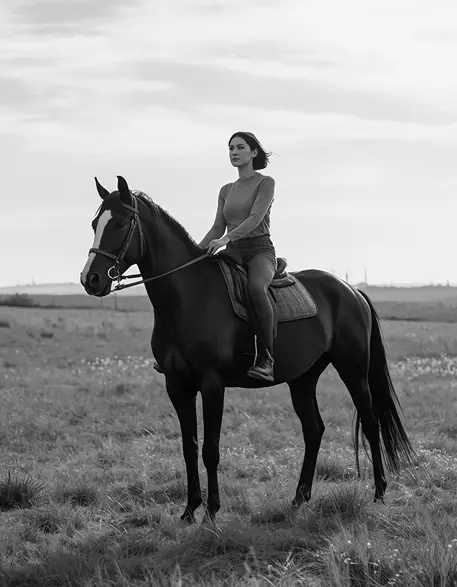
8. Black-and-White Riding Portrait
FINE-ART MONOCHROME
A slow, calm ride across open plains, rendered as a fine-art black-and-white photograph.
Use the uploaded image as the exact identity reference and preserve the subject’s identity, facial structure, skin tone, eyes, nose, lips, hairstyle, and proportions exactly, with no beautification or identity modification. Retain natural pores, subtle skin texture, minor imperfections, and natural facial asymmetry, avoiding overly smooth AI skin. Create a photorealistic black-and-white fine-art photograph of the same person slowly riding a tall black horse across an open grassy plain, sitting upright with relaxed shoulders, loose natural reins, and a calm expression while looking toward the horizon. Use soft directional sunlight from the left at approximately 35 degrees, converted into a neutral monochrome tonal range with an effective 5200K daylight balance, creating gentle highlights and deep but detailed shadows. Photograph with a 90mm lens at f/2.0, shallow depth of field, natural perspective compression, and subtle film grain. Preserve realistic horse hair, mane, skin pores, clothing fibers, saddle leather, and wind movement. Use a vertical 4:5 composition with wide negative sky space. Avoid crushed blacks, blown highlights, plastic skin, distorted horse anatomy, extra fingers, duplicated reins, artificial outlines, text, and watermarks.
Couple and Horse AI Photo Prompt
Horse edits can also work for couples, especially when the two people are positioned naturally instead of being merged into one artificial-looking pose.
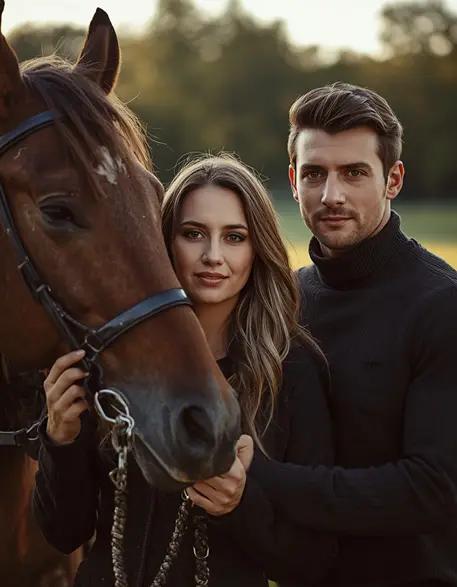
9. Couple With Horse Prompt
ROMANTIC OUTDOOR
A romantic sunset portrait with both identities preserved separately and naturally.
Use the uploaded couple photo as the exact identity reference for both people. Preserve both individuals’ facial identities, facial structures, skin tones, eyes, noses, lips, hairstyles, proportions, and natural features exactly, with no beautification, face reshaping, age changes, or identity alteration. Retain natural pores, subtle skin texture, minor imperfections, and natural facial asymmetry on both people, avoiding AI-perfect or overly smooth skin. Create a photorealistic romantic outdoor portrait where the couple stands beside a calm dark-brown horse, with the woman gently touching its neck and the man holding the reins while standing slightly behind her. Their body language should feel affectionate but natural, with relaxed shoulders and genuine soft expressions. Use warm sunset light coming from the back-left at approximately 30 degrees and 4200K, creating a subtle golden rim around their hair and the horse. Photograph with an 85mm lens at f/2.0, shallow depth of field, realistic skin rendering, and smooth background compression. Make hair, skin, clothing fabric, horse coat, mane, and leather tack physically realistic. Use a vertical 4:5 Instagram composition. Do not blend the two identities, merge faces, create extra limbs or fingers, distort hands, duplicate the horse, flatten clothing, or add text and watermarks.
Horse Prompt Ideas for Viral Instagram Photos
If your goal is an aesthetic or trending Instagram image, the scene should have a clear visual concept instead of simply adding a horse to a portrait. Popular examples commonly combine a strong subject, cinematic setting, carefully controlled lighting, and a distinctive pose.
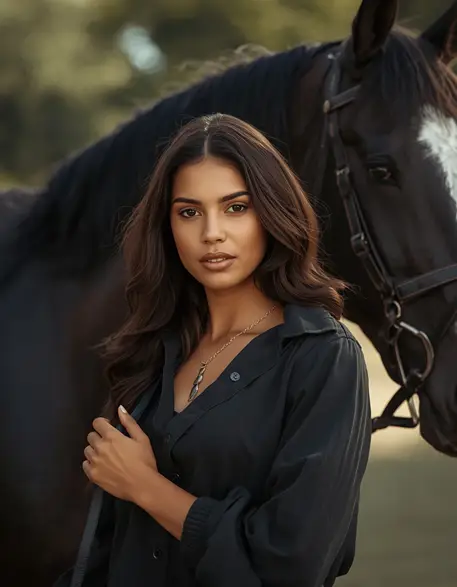
10. Horse Behind Me Prompt
FASHION PORTRAIT
The horse’s head peeks over the shoulder while the subject stands centered — a strong fashion-editorial style shot.
Use the uploaded photo as the exact identity reference and preserve the person’s identity, facial features, skin tone, hairstyle, and proportions without beautification or alteration. Keep natural pores, subtle skin texture, minor imperfections, and natural facial asymmetry. Create a photorealistic fashion portrait of the same person standing confidently in front of a majestic black horse, with the horse positioned directly behind them and its head slightly visible over one shoulder. The subject stands naturally with one hand holding the reins and the other relaxed, giving a calm, confident expression. Use soft directional sunlight from the upper right at approximately 25 degrees with a 4800K warm-neutral tone, producing a gentle rim light on the hair and horse mane. Capture with an 85mm lens at f/1.8, shallow depth of field, realistic background compression, and subtle cinematic grain. Make skin, hair, clothing fabric, horse coat, mane, and leather reins physically textured and natural. Use a vertical 4:5 composition with the subject centered slightly off-axis. Avoid face alteration, AI-perfect skin, extra fingers, malformed horse anatomy, duplicated reins, unnatural horse placement, plastic clothing, text, logos, and watermarks.
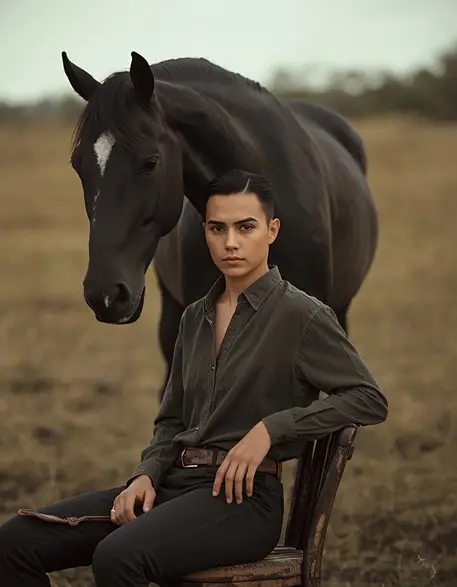
11. Horse Sitting Aura Prompt
QUIET CONFIDENCE
A calm, seated pose on a weathered chair with the horse standing close behind — built for a quiet, confident aura shot.
Use the uploaded image as the exact identity reference and preserve the subject’s facial identity, skin tone, facial structure, hairstyle, and proportions exactly, with no beautification or identity alteration. Retain natural pores, subtle skin texture, minor imperfections, and natural facial asymmetry, avoiding overly smooth AI skin. Create a photorealistic cinematic portrait of the same person sitting casually on a simple weathered wooden chair in an open field while a powerful black horse stands closely behind them, creating a quiet aura of confidence. The subject sits naturally with one elbow resting loosely on the thigh, one hand holding a thin leather rein, shoulders relaxed, and gaze slightly downward with a calm expression. Use soft backlight from the left at approximately 35 degrees, 5000K daylight, with gentle fill from the front to preserve facial detail. Photograph with an 85mm lens at f/1.8, shallow depth of field, natural background blur, and subtle film grain. Preserve realistic skin, hair, wood, fabric, leather, and horse textures. Use a vertical 4:5 composition. Avoid stiff posing, excessive shadows across the face, distorted hands, extra fingers, incorrect horse anatomy, plastic textures, text, and watermarks.
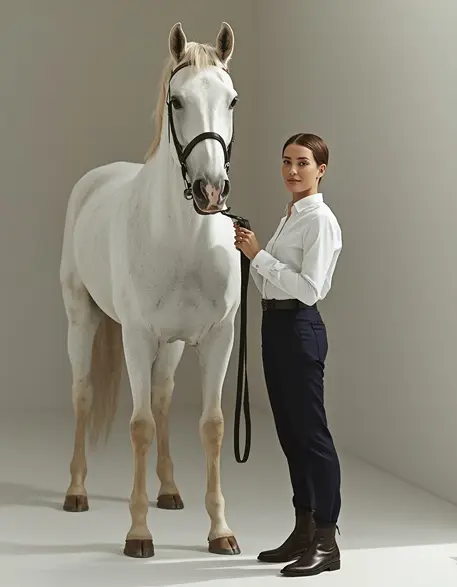
12. White Horse Luxury Portrait
CLEAN MODERN EQUESTRIAN
A refined, clean-toned portrait beside a white Arabian horse — a good fit for a minimal, luxury aesthetic.
Use the uploaded photograph as the exact identity reference and preserve the subject’s identity, facial features, skin tone, hairstyle, and proportions exactly, with no beautification or alteration of identity. Maintain natural pores, subtle skin texture, minor imperfections, and natural facial asymmetry, avoiding artificial smoothness. Create a photorealistic luxury portrait of the same person standing beside a tall white Arabian horse in a clean modern equestrian setting, wearing a refined white shirt, dark trousers, and polished boots. The subject gently holds the reins and looks toward the camera with a relaxed, confident expression. Use soft sunlight entering from the left at approximately 30 degrees with a neutral 5200K color temperature, creating controlled highlights across the white horse while maintaining detailed shadows. Capture with an 85mm lens at f/2.0, shallow depth of field, realistic compression, and natural bokeh. Preserve physically accurate horse hair, skin pores, hair strands, shirt fabric, boot leather, and reins. Use a vertical 4:5 composition. Avoid blown-out white areas, plastic skin, distorted hands, malformed horse features, duplicate objects, artificial facial symmetry, text, logos, and watermarks.
Each of these can be adjusted further — swap the horse breed or color, change the outfit, or add “preserve each individual’s separate identity; do not blend facial features” if you’re working with a couple or group photo.
How to use any prompt above on Gemini: choose a clear photo where your face is visible and reasonably sharp, upload it to Gemini, copy one complete prompt from this article and paste it in, keep the identity instructions intact, then generate. If the first output looks off, refine one element at a time — for example, change the horse from black to white, or swap the pose from standing to riding.
How to use any prompt above on ChatGPT: start a new chat, upload your reference photo, paste the prompt directly into the message box, and generate the image. Current Gemini prompt guides also recommend uploading a suitable reference image, customizing the pose, outfit, background, lighting, and aspect ratio, then refining the result rather than changing everything at once.
How to Make Horse AI Photos Look More Realistic
The biggest difference between a basic AI photo and a convincing photo usually comes from specificity. Instead of writing only “make me ride a black horse,” describe the rider’s posture, horse movement, light direction, camera lens, environment, clothing, and realistic textures.
Subject: Who is in the image?
Identity: Which facial characteristics must remain unchanged?
Pose: Standing, sitting, riding, walking, jumping, or looking back?
Horse: Breed, color, size, mane, movement, and position.
Environment: Field, stable, mountains, desert, arena, or city setting.
Lighting: Direction, softness, and color temperature.
Camera: Lens, aperture, depth of field, and perspective.
Texture: Skin, hair, clothing, leather, grass, and horse coat.
Composition: 4:5 for Instagram posts or 9:16 for Stories and Reels.
Avoid clauses: Anatomy problems, extra fingers, duplicate objects, text, and watermarks.
This approach is more useful than adding random words such as “4K,” “viral,” or “ultra realistic” without explaining what the image should actually look like.
Common Problems With AI Horse Photos
Face doesn’t look like the original? Use a clear source image and explicitly state that the uploaded image is the exact identity reference. Avoid adding conflicting instructions that ask the AI to change facial structure.
Hands or reins look wrong? Ask for anatomically correct hands and natural rein placement. If the result is still incorrect, regenerate with a simpler pose instead of adding many more instructions.
Horse legs look unnatural? Action scenes are more difficult than static portraits — a walking or standing horse can be easier to generate correctly than a horse jumping at high speed.
Skin looks too smooth? Include natural pores, subtle texture, minor imperfections, and facial asymmetry, and explicitly ask the model to avoid plastic or AI-perfect skin.
Background looks fake? Specify the lighting direction and camera lens instead of relying only on “cinematic background.” A shallow depth of field and realistic background compression help create a more photographic result.
Can You Make Horse Prompts for Boys and Girls?
Yes. The same basic scene can be adapted for boys, girls, men, women, couples, and children by changing the subject description, clothing, pose, and mood. For boys, confident riding poses, dark outfits, black horses, mountain landscapes, and cinematic lighting are common choices. For girls, elegant equestrian clothing, white or brown horses, soft golden light, and graceful poses can create a different visual style. The important part is not to create separate technical instructions for every person — keep the identity-preservation and realism structure consistent, then customize the scene.
Which Tool Should You Use: Gemini or ChatGPT?
Factor
Google Gemini
ChatGPT
Face/identity consistency
Strong on close reference matching
Very strong across edits/follow-ups
Speed
Generally faster renders
Slightly slower, more processing
Iteration
Best re-run fresh each time
Handles “tweak this” follow-ups well
Access
Free tier available, app + web
Free tier available, app + web
Best for
One-shot restyle on a single photo
Photos you plan to refine over multiple turns
There’s no single “best” answer here — it depends on your workflow. If you want one clean result fast, Gemini’s straightforward upload-and-generate flow works well. If you expect to go back and forth adjusting the pose, horse color, or lighting, ChatGPT’s conversational editing has an edge.
FAQ About Horse Prompts
What is a horse prompt?
A horse prompt is a detailed AI image instruction for creating or editing a photo involving a horse. It can describe riding, standing beside a horse, horse portraits, cinematic scenes, poses, clothing, lighting, camera settings, and background.
Can I use these prompts in Gemini?
Yes. These prompts are written as copy-paste instructions for image-generation workflows such as Gemini and can also be adapted for ChatGPT and other AI image tools.
Do I need a professional photo?
No. A clear smartphone portrait can work well. The face should be visible, reasonably sharp, and free from heavy filters if you want the AI to preserve your identity more accurately.
Which horse color looks best for an aura photo?
Black horses work particularly well for dramatic monochrome and aura-style images because their dark coat creates strong contrast against bright skies and open landscapes.
Can I create a horse riding photo without actually riding a horse?
Yes. An AI image generator can create a simulated riding scene from a reference portrait. The result depends on the quality of the source photo and how clearly the prompt describes the rider, horse, pose, perspective, and environment.
What aspect ratio is best for Instagram?
A 4:5 portrait is a strong choice for regular Instagram feed posts because it gives the subject enough vertical space. Use 9:16 when the image is intended for Stories or Reels.
Why does my AI horse image look fake?
The most common reasons are vague scene descriptions, unrealistic poses, weak lighting instructions, incorrect anatomy, poor source photos, or excessive AI-style effects. Add realistic camera, lighting, texture, and anatomy instructions, and simplify the pose when necessary.
Final Thoughts
A strong horse prompt does more than tell an AI to put someone on a horse. It describes the complete photographic scene, including identity preservation, pose, horse movement, lighting, camera perspective, clothing, environment, texture, and composition. Start with one of the ready-to-use prompts above, then change only the elements you want, such as the horse color, background, outfit, pose, or mood. That simple approach makes it easier to create personalized Gemini and ChatGPT images without losing the realistic look of the original photo.