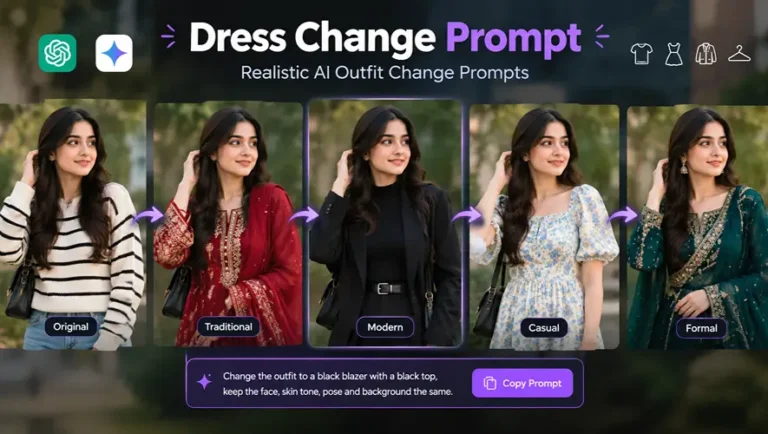
Dress Change Prompt: Realistic AI Outfit Change Prompts
A dress change prompt lets you replace the clothing in an existing photo while keeping the person’s face, identity, skin tone, pose, and overall appearance consistent. With a detailed prompt, you can create realistic outfit variations in Gemini, ChatGPT, and other AI image editors without taking a new photograph for every look.
The most reliable results come from describing the exact garment, fabric, color, fit, lighting, camera perspective, and composition while clearly telling the AI what must remain unchanged. Below are original, copy-and-paste prompts designed for realistic AI photo editing — starting points for fashion experiments, social media photos, profile pictures, wedding looks, traditional outfits, and everyday styling.
How to Write a Realistic Dress Change Prompt
A strong prompt should tell the image model what to change and what not to change. Instead of writing only “change my dress,” specify the clothing, material, fit, lighting, camera style, pose, and image format. A useful structure is:
Garment → color → fabric → fit → occasion → lighting → camera → pose → identity protection → negative instructions → aspect ratio
What to Include in Your Prompt
Garment: saree, maxi dress, blazer, kurti, suit, gown, etc.
Tap View Full Prompt to expand any box, then Copy Prompt to grab it in one tap. Upload your source photo first, then paste the prompt right after.
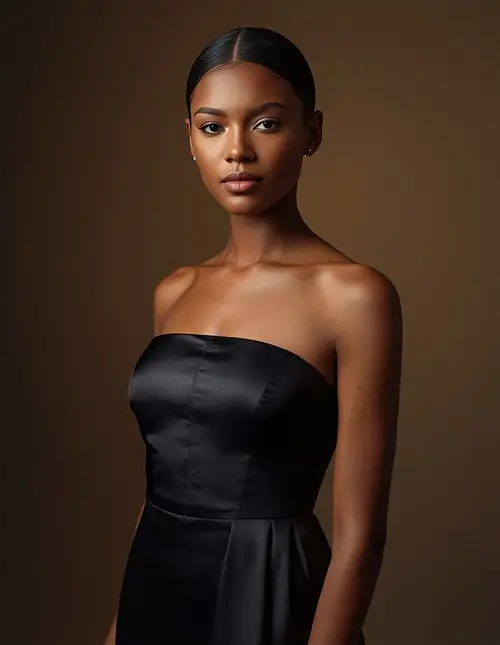
1. Elegant Black Evening Dress
EVENING · FORMAL
Use this when you want to turn a casual portrait into a polished evening-fashion photo without changing the person.
Replace only the current outfit with an elegant floor-length black satin evening dress featuring a naturally fitted waist, subtle draping, realistic stitching, and physically accurate satin reflections while keeping the original person completely recognizable. Preserve the exact identity, face shape, facial features, skin tone, hair, body proportions, and expression with no beautification and no alteration of identity. Retain natural pores, fine skin texture, tiny imperfections, and normal facial asymmetry; do not create artificially smooth or perfectly symmetrical AI skin. Use soft warm key light coming from the front-left at approximately 4200K with a subtle low-intensity rim light from behind the right shoulder. Photograph the result with an 85mm portrait lens at f/1.8, natural shallow depth of field, realistic skin rendering, and gentle background separation. Make the satin fabric physically believable with natural folds, tension points, highlights, and weight rather than plastic-looking surfaces. Keep the pose relaxed and elegant with naturally lowered shoulders and a calm expression. Portrait composition, 4:5 aspect ratio. Do not change the background, body structure, hands, facial proportions, or hair; no extra fingers, distorted limbs, artificial accessories, text, logo, or watermark.
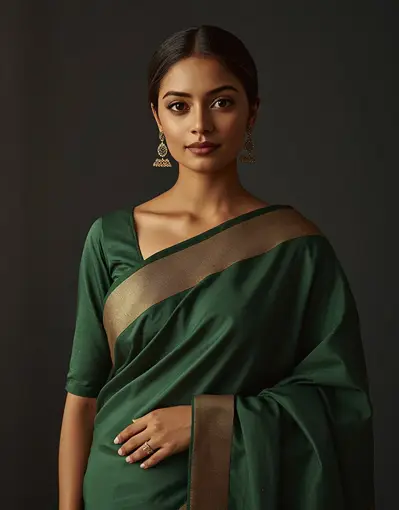
2. Traditional Saree Transformation
TRADITIONAL · SOUTH ASIAN
This style works especially well for Indian and South Asian audiences looking for a realistic traditional outfit transformation.
Change the existing outfit into a sophisticated deep emerald-green silk saree with a subtle gold border and a matching fitted blouse, keeping the saree drape anatomically and culturally natural with realistic pleats, folds, fabric weight, and stitching. Preserve the exact identity, facial features, skin tone, face shape, hair, body proportions, and original expression with no beautification and no identity alteration. Keep natural pores, fine skin texture, minor imperfections, and authentic facial asymmetry instead of creating an overly smooth or AI-perfect face. Illuminate the subject with soft window light entering from the upper left at approximately 5000K, with gentle natural shadow falloff across the fabric. Capture the portrait using a 50mm lens at f/2.0 with realistic depth of field and photographic perspective. Make the silk physically realistic, including subtle fiber texture, gravity-based folds, natural pleat compression, and restrained highlights. Give the subject a relaxed upright pose with one hand naturally resting near the saree pleats and a calm, confident expression. Use a 4:5 portrait composition. Do not alter the background, face, hands, body proportions, jewelry unless already present, or hairstyle; avoid melted fabric, extra fingers, warped borders, artificial skin, text, logos, and watermarks.
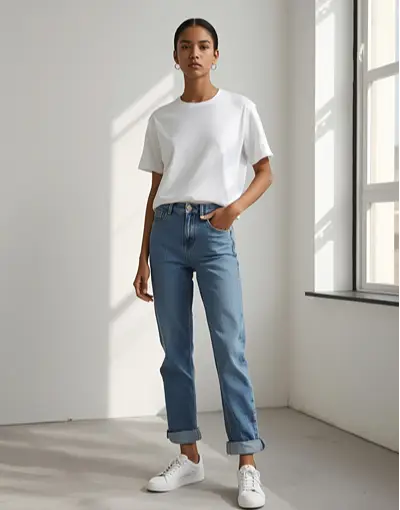
3. Casual Denim Outfit
CASUAL · EVERYDAY
For a modern social-media look, a casual outfit is often easier to control when the prompt changes only the clothing.
Replace the current clothing with a contemporary casual outfit consisting of a clean white cotton T-shirt, relaxed medium-blue denim jeans, and minimal white sneakers, while keeping the same person, identity, face, skin tone, body proportions, hairstyle, and pose unchanged. Do not beautify or alter the identity in any way. Preserve visible pores, natural skin texture, subtle imperfections, and normal facial asymmetry; avoid overly smooth AI-generated skin. Use soft daylight coming from the front-right through a large window at approximately 5600K, producing realistic directional shadows on the clothing. Shoot with a 35mm lens at f/2.8 for a natural lifestyle perspective and moderate background blur. The cotton should show fine woven texture and natural wrinkles, while the denim must have believable weave, seams, fading, weight, and realistic folds around the knees and hips. Keep the pose casual and unstaged, with relaxed shoulders and natural hand placement. Create a clean 4:5 Instagram-style portrait. Do not modify the environment, face, hands, body structure, or hair; no extra fingers, warped denim seams, plastic fabric, exaggerated body shape, text, logo, or watermark.
4. Professional Office Look
PROFESSIONAL · FORMAL
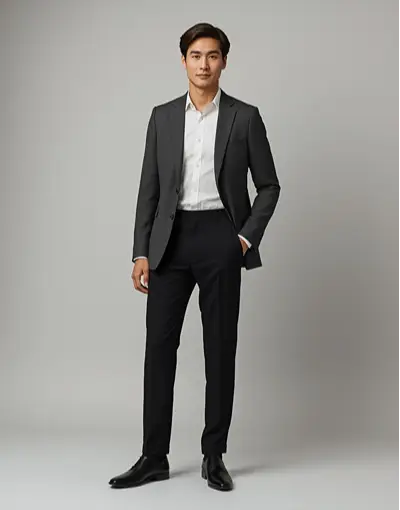
A formal clothing swap can turn an ordinary photograph into a professional profile image.
Replace the existing outfit with a tailored charcoal-gray blazer, crisp white cotton shirt, straight-leg black trousers, and understated black leather shoes, creating a refined professional appearance while preserving the original person exactly. Keep the identity, face shape, facial features, skin tone, hair, body proportions, and expression unchanged, with no beautification or identity modification. Retain natural pores, subtle skin texture, minor imperfections, and realistic facial asymmetry rather than AI-perfect skin. Use soft office-window light from the left at approximately 5200K combined with a very subtle neutral fill from the front. Capture the image with an 85mm lens at f/2.0, realistic portrait compression, shallow depth of field, and natural photographic detail. The blazer must show physically accurate wool texture, structured seams, realistic shoulder construction, and natural fabric creasing. Keep the subject standing naturally with relaxed shoulders and a professional but approachable expression. Use a vertical 4:5 composition. Preserve the existing background and all untouched features; avoid exaggerated shoulders, distorted hands, artificial skin, melted clothing edges, text, logos, and watermarks.
5. Wedding Guest Dress
FORMAL · WEDDING
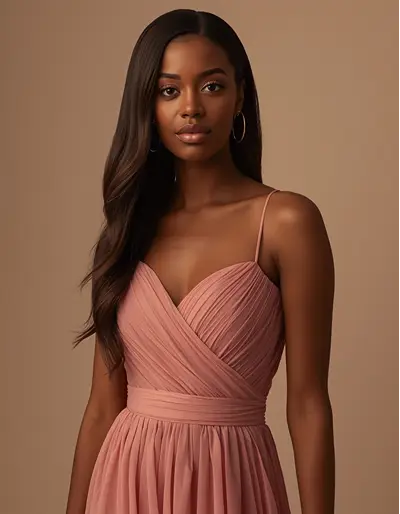
An elegant, understated midi dress suited for a formal wedding-guest photo.
Change only the current outfit into an elegant dusty-rose pink chiffon midi dress suitable for a formal wedding guest, featuring realistic layered fabric, subtle pleating, a naturally fitted waist, and tasteful understated detailing. Preserve the person’s exact identity, face, skin tone, facial structure, hairstyle, body proportions, and expression with absolutely no beautification or identity alteration. Keep natural pores, fine skin texture, small imperfections, and normal facial asymmetry so the face does not become artificially smooth or symmetrical. Use warm diffused evening light coming from the upper-left at approximately 4300K with a soft golden rim light from behind. Photograph using an 85mm lens at f/1.8 with realistic shallow depth of field and natural portrait perspective. Make the chiffon physically accurate, lightweight, semi-translucent only where appropriate, with believable folds, gravity, seams, and movement. Pose the subject naturally with a relaxed stance and gentle expression. Use a 4:5 portrait frame. Keep the background, face, hands, hair, and body structure unchanged; avoid excessive jewelry, transparent body exposure, malformed fingers, warped fabric, artificial skin, text, logos, and watermarks.
6. Modern Streetwear Style
STREETWEAR · CASUAL
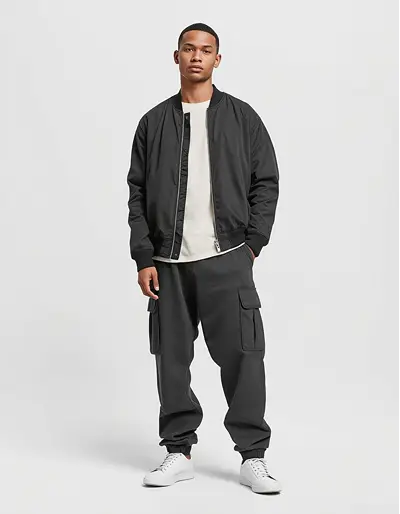
An oversized bomber-jacket streetwear look with a natural, loose pose.
Replace the existing outfit with modern minimalist streetwear: an oversized washed-black bomber jacket, heavyweight cream T-shirt, relaxed charcoal cargo trousers, and clean low-profile sneakers, keeping the original person and scene consistent. Preserve exact identity, facial features, skin tone, face shape, hair, body proportions, and expression with no beautification and no alteration of identity. Maintain natural pores, subtle skin texture, minor imperfections, and authentic facial asymmetry rather than generating an AI-perfect face. Use cool overcast daylight from the upper front-left at approximately 6000K with soft ambient fill and realistic shadow gradients. Capture the image with a 35mm lens at f/2.8 for a natural street-photography perspective. The bomber jacket should have realistic nylon texture, stitching, ribbed cuffs, zipper construction, and gravity-based folds; the cargo trousers should show believable cotton weave and pocket structure. Keep the pose loose and natural, with one hand relaxed and the shoulders slightly angled. Use a 4:5 composition. Do not alter the background, face, hands, body proportions, or hairstyle; avoid exaggerated clothing volume, extra fingers, distorted pockets, plastic textures, text, logos, and watermarks.
7. Soft Pastel Summer Dress
SUMMER · SOFT LIGHT
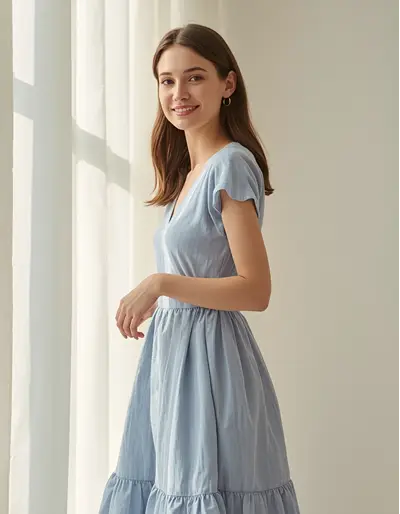
A light linen-cotton midi dress with gentle diffused daylight, ideal for a warm-weather aesthetic post.
Transform only the outfit into a soft pastel-blue summer midi dress made from lightweight linen-cotton fabric, with a relaxed waist, natural flowing skirt, delicate seams, and realistic fabric movement. Preserve the original person’s exact identity, facial features, face shape, skin tone, hair, body proportions, and expression, with no beautification or identity alteration. Retain natural pores, fine skin texture, subtle imperfections, and realistic facial asymmetry instead of creating an unnaturally perfect face. Use soft sunlight coming from the upper-right at approximately 5600K, diffused through a thin curtain to create gentle highlights and realistic shadows. Photograph with a 50mm lens at f/2.2, natural perspective, shallow depth of field, and realistic skin detail. The linen-cotton material must show visible woven texture, small natural creases, accurate drape, and physically believable folds. Keep the pose relaxed and slightly turned toward the light with a natural soft smile. Use a 4:5 portrait composition. Preserve the background, face, hair, hands, and body proportions; avoid floating fabric, plastic texture, malformed fingers, excessive smoothing, text, logos, and watermarks.
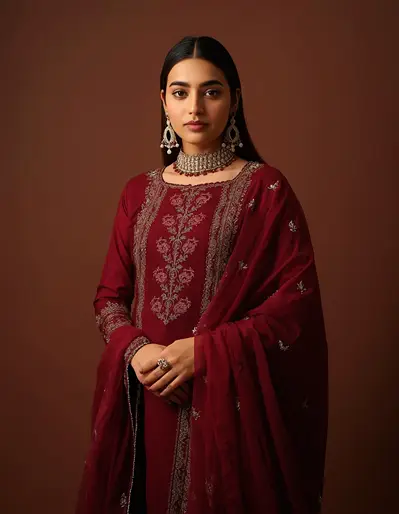
8. Traditional Festive Outfit
FESTIVE · TRADITIONAL
A refined embroidered kurta and dupatta look for festive occasions, restrained rather than overly ornate.
Replace the existing clothing with a refined festive traditional outfit consisting of a deep maroon embroidered kurta, matching straight trousers, and a lightweight coordinated dupatta, keeping the design elegant and realistic rather than excessively ornate. Preserve the person’s exact identity, facial features, skin tone, face shape, hair, body proportions, and expression with no beautification or identity alteration. Retain natural pores, subtle skin texture, minor imperfections, and normal facial asymmetry so the face remains authentically photographic. Use warm decorative light from the front-left at approximately 3200K with a subtle neutral fill from the right to maintain realistic skin tones. Capture the subject with an 85mm lens at f/2.0 and natural shallow depth of field. The embroidered fabric must show individual thread detail, believable stitching, natural folds, fabric weight, and realistic interaction with the body. Give the subject a relaxed standing pose with the dupatta falling naturally and a calm expression. Use a 4:5 portrait format. Keep the existing environment, face, hands, hair, and proportions unchanged; avoid excessive embroidery, distorted patterns, melted fabric, extra fingers, artificial skin, text, logos, and watermarks.
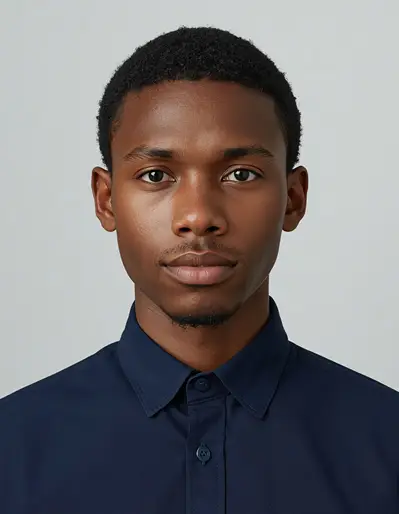
9. Passport-Style Outfit Edit
DOCUMENT PHOTO
A passport size photo needs a restrained clothing edit rather than a dramatic fashion transformation.
Change only the visible clothing into a simple formal navy-blue collared shirt suitable for a clean passport-style photograph, keeping the original person’s exact face, identity, skin tone, facial features, hairstyle, head shape, and proportions completely unchanged. Do not beautify or alter identity. Preserve natural pores, fine skin texture, minor imperfections, and normal facial asymmetry; do not create overly smooth or AI-perfect skin. Use evenly diffused neutral light directly from the front at approximately 5000K with minimal directional shadowing for an authentic identification-photo appearance. Photograph with an 85mm lens at f/4.0 to maintain natural facial proportions and sufficient sharpness. Make the shirt fabric physically realistic with visible cotton texture, natural collar structure, stitching, and subtle folds. Keep the head upright, expression neutral, shoulders relaxed, and eyes naturally facing the camera. Use a centered vertical 4:5 composition that can be cropped for passport-size requirements. Do not change the background, face, hair, head proportions, or expression; no makeup enhancement, no facial reshaping, no extra accessories, no text, and no watermark.
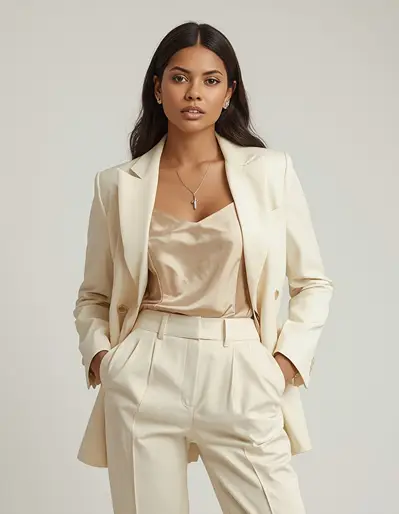
10. Luxury Fashion Restyle
EDITORIAL · LUXURY
A cream-toned tailored ensemble with editorial lighting for a premium fashion-restyle look.
Replace the current outfit with a sophisticated cream-colored tailored fashion ensemble featuring a structured blazer, silk camisole, high-waisted trousers, and minimal refined accessories, while preserving the original person’s exact identity and photographic likeness. Keep the face, facial features, skin tone, face shape, hair, body proportions, and expression unchanged, with no beautification and no identity alteration. Preserve natural pores, subtle skin texture, minor imperfections, and authentic facial asymmetry rather than creating artificial AI-perfect symmetry. Use a large softbox positioned 45 degrees to the left of the subject at approximately 4800K, with a gentle warm rim light from behind at approximately 3800K. Photograph using an 85mm lens at f/1.8 with realistic compression, shallow depth of field, and high-detail photographic rendering. The blazer must have physically accurate tailoring, wool texture, seams, lapels, and natural tension around the shoulders, while the silk fabric should show subtle realistic highlights and folds. Keep the pose confident but relaxed, with natural posture and an understated expression. Use a premium editorial 4:5 composition. Do not alter the background, face, hands, hair, or body structure; avoid excessive retouching, distorted fingers, unrealistic fabric, exaggerated anatomy, text, logos, and watermarks.
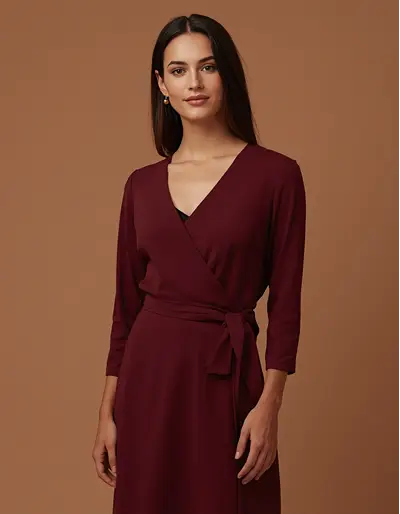
11. Minimalist Date-Night Look
EVENING · MINIMALIST
A dark-burgundy wrap dress in matte crepe with warm evening lighting, built for a natural date-night photo.
Change the current outfit into a sophisticated minimalist dark-burgundy wrap dress made from realistic matte crepe fabric, with a natural waistline, modest neckline, subtle folds, and an elegant evening silhouette. Preserve the person’s exact identity, face shape, facial features, skin tone, hair, body proportions, and expression with no beautification or alteration of identity. Retain natural pores, fine skin texture, small imperfections, and authentic facial asymmetry instead of producing an overly smooth or symmetrical AI face. Use soft warm light from the front-right at approximately 3600K with a faint neutral fill from the left to maintain realistic skin color and dimensionality. Capture the image with a 50mm lens at f/1.8, realistic shallow depth of field, natural perspective, and photographic skin detail. The crepe fabric should have believable fine texture, weight, stitching, folds, and light absorption rather than a plastic appearance. Keep the pose natural and comfortable, with relaxed shoulders and a subtle genuine expression. Use a vertical 4:5 composition suitable for social media. Preserve the original background, hands, face, hair, and body proportions; avoid overly revealing changes, distorted hands, artificial skin, warped fabric, text, logos, and watermarks.
How to Get Better Results From AI Outfit Edits
Even the best prompt can struggle if the source image is difficult to edit. For cleaner clothing boundaries, use a sharp photo where the garment is clearly visible. Full-body or three-quarter images with a neutral pose generally give an image model more information about the clothing area. Clear garment edges, good lighting, and avoiding heavy filters or extreme angles all help.
Start With One Clothing Change
If the result changes the face, hands, or background, simplify the request. Ask for one main clothing transformation before adding accessories or multiple garments. For example, change the dress first, then make a second edit for color or accessories. This makes it easier to identify which instruction caused an unwanted result.
Protect the Parts You Do Not Want Changed
A useful preservation line is: “Keep the face, hair, body proportions, pose, hands, background, and lighting unchanged.”
For a partial edit, be even more specific: “Change only the jacket; keep the shirt, trousers, shoes, face, hands, hair, pose, and background unchanged.”
Use a Clear Reference Photo
A high-resolution image with visible clothing boundaries is usually easier for an image model to interpret. Avoid heavily compressed photos, extreme poses, crossed arms covering the clothing, and strong filters. If you’re using a generated image as inspiration, use it as a visual reference for the clothing style rather than expecting the model to reproduce every pixel exactly.
Can You Use These Prompts in Gemini and ChatGPT?
Yes. These prompts are written as general image-editing instructions, so you can adapt them for Gemini, ChatGPT, and other AI image tools that support editing from an uploaded photograph. The exact result can vary between models — a prompt that produces a clean result in one system may need a shorter or more targeted version in another.
For Gemini, specify the garment and preservation requirements clearly. For ChatGPT, upload the source photo and describe the exact part you want changed. The practical answer is to choose the tool that supports the type of image editing you need and then adjust the prompt based on the first result.
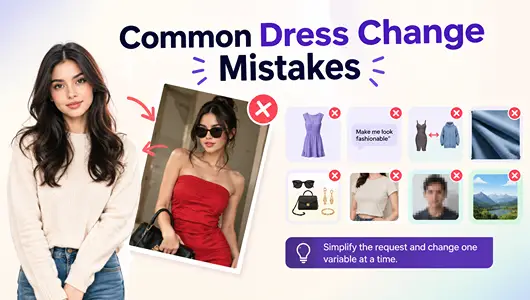
Common Dress Change Mistakes
Asking the model to change the outfit, face, hairstyle, body shape, and background simultaneously.
Using vague instructions such as “make me look fashionable.”
Giving conflicting fit descriptions such as “tight and oversized.”
Ignoring fabric texture and realistic folds.
Using too many accessories in the first generation.
Forgetting to tell the model which clothing should remain unchanged.
Using a low-resolution or heavily filtered source photo.
Overloading the prompt with unrelated scene details.
If the first output looks wrong, don’t automatically make the prompt longer. Simplify the request and change one variable at a time when results become inconsistent.
Frequently Asked Questions
What is a dress change prompt?
A dress change prompt is an instruction that tells an AI image editor how to replace or restyle clothing in an existing photograph while preserving selected parts of the original image, especially the person’s identity and facial appearance.
Which AI tool can I use for outfit changes?
Gemini, ChatGPT, and other image-editing systems can be used for outfit transformations when image editing is supported. The quality depends on the model, source image, and specificity of the instruction.
What makes the best outfit-change prompt?
The strongest prompts clearly identify the garment, color, material, fit, lighting, camera perspective, pose, composition, and preservation requirements. They also include negative instructions for common problems.
Can I change only a shirt or jacket?
Yes. Partial clothing edits can work well when you explicitly identify the garment and tell the AI to preserve everything else. This is often easier to control than changing the entire outfit at once.
Can I use a dress change prompt with a passport photo?
Yes, but keep the edit conservative. A simple formal shirt or blazer is more appropriate than a dramatic fashion transformation. Preserve the face, neutral expression, head position, and proportions.
Why does AI change my face when I only ask for new clothes?
The model may reinterpret the entire image rather than treating the clothing as an isolated edit. A strong identity-preservation clause, a clear source photo, and a focused clothing request can reduce unwanted changes.
Should I use a short prompt or a detailed prompt?
For simple edits, a short prompt may be enough. For photorealistic transformations where identity, fabric, lighting, camera perspective, and composition matter, a technically detailed prompt gives you more control.
Can these prompts be used with personalized AI image editing?
Yes. If your tool supports reference images or personalized image generation, you can combine the clothing instructions with a reference photo. Keep the identity-preservation language explicit when likeness matters.
What if the AI adds extra accessories?
Tell it exactly what should not be added, such as “no hat, no handbag, no necklace, no additional jewelry.” It is usually better to add only the restrictions relevant to your specific image.
Final Takeaway
A good dress change prompt is more than a description of a new outfit. It tells the AI exactly what clothing to replace while protecting identity, natural skin texture, body proportions, lighting, fabric realism, composition, and the parts of the original photograph that should remain untouched.
Start with one clear outfit transformation, use a sharp source photo, and refine one element at a time. With the right combination of garment details, realistic photography language, preservation instructions, and negative clauses, you can create much more convincing AI outfit edits for social media, portraits, traditional looks, professional photos, and creative fashion experiments.